Waxed Cloth or Silicone: Choosing Reusable Food Wraps for Home and Kitchen
Before plastic film and single-use bags became the default in many kitchens, people wrapped bread, butter, and cheese in cloth treated with fats or wax to keep food fresh. Today the same idea returns in two distinct forms: the traditional beeswax-coated cloth wrap and the modern silicone food cover. Both aim to reduce waste and extend the life of leftovers, yet they suit different routines and preferences. This article traces the practical history of waxed cloth, compares the two approaches, and offers guidance on which one might fit your home.
A brief historical context
Using cloth and naturally derived coatings to protect food spans many cultures. In cooler climates, butter and cheese were commonly wrapped in linen or waxed paper to slow drying and rancidity. Beeswax and animal fats have long been used as protective coatings because they repel moisture and form a breathable seal. Those same principles underlie contemporary beeswax wraps, which are cotton fabric infused with a blend of beeswax, tree resin, and plant oil to create a tacky, flexible wrapper.
Silicone, by contrast, is a 20th-century material that entered kitchenware for its durability and heat resistance. Silicone lids, stretchable covers, and food-grade sheets offer an elastic, reusable alternative to disposable wraps, relying on form-fitting seals rather than porous wax coatings.
Comparing the approaches
Beeswax-coated cloth wraps
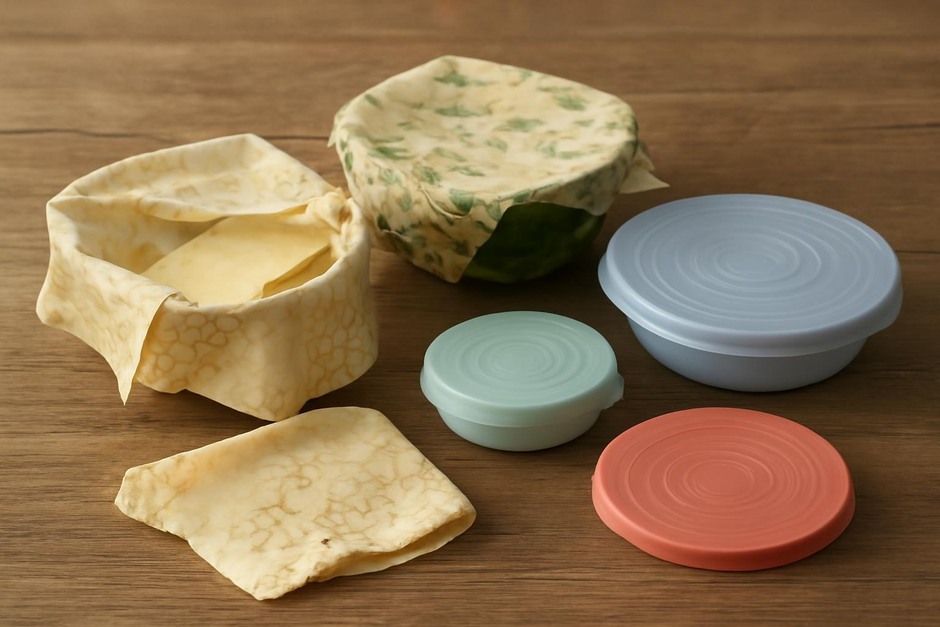
- How they work: Cotton fabric is coated with beeswax and often a small amount of resin and oil; warmth from hands helps the wrap conform to bowls and food and creates a light seal.
- Strengths: Lightweight, flexible, compostable at end of life (fabric and wax vary), naturally breathable which can be beneficial for some cheeses and bread, and appealing tactile aesthetic.
- Limitations: Not ideal for raw meat or very wet foods (can be harder to clean and may retain odors), sensitivity to heat (they soften and can remelt), and limited lifetime—regular use leads to wear and gradual loss of tack.
Silicone covers and wraps
- How they work: Food-grade silicone pieces stretch over containers or food, creating an airtight or near-airtight seal through elasticity.
- Strengths: Durable, dishwasher-safe and easy to sanitize, suitable for hot and cold applications, works well with liquids and raw foods, and typically lasts several years with care.
- Limitations: Heavier and less breathable (not ideal for items that need air circulation), non-biodegradable, may be more expensive initially, and lacks the natural aesthetic of fabric wraps.
How to choose between them
Consider the typical items you store and how you live in your kitchen. The decision often comes down to use case, maintenance preference, and values around materials.
Practical scenarios
- If you keep a lot of fresh produce, bread, or soft cheeses: Beeswax wraps can be excellent because they allow slight breathability, helping prevent condensation that accelerates spoilage. They also fold neatly around awkward shapes like cut lemons or half avocados.
- If you frequently store soups, marinades, raw meat, or busy, hands-off meal prep: Silicone covers are more hygienic and easier to clean in a dishwasher. Their airtight seals and heat resistance make them versatile for both storage and reheating.
- If you prioritize low-impact materials and a natural aesthetic: Beeswax and cotton appeal as more natural and often compost-friendly alternatives—just be mindful of care and the product’s true end-of-life options.
- If longevity and low maintenance matter: Silicone’s resistance to staining and odor retention gives it an edge for people who want a set-and-forget solution.
Care, longevity, and a few tips
Whichever you choose, proper care extends usefulness. Beeswax wraps should be rinsed with cool water and mild soap, dried flat, and kept away from direct heat. Periodically refreshing a wrap with a light application of melted beeswax can extend its life. Silicone covers tolerate dishwashers, boiling, and freezer storage, but avoid abrasive cleaners that may dull the surface. Inspect any reusable wrap for wear: fabric that tears or silicone that cracks should be retired.
For many households, the best approach is complementary: keep a few beeswax wraps for bread, cheese, and produce, and reserve silicone lids for liquids, raw proteins, and heavy-duty tasks. Matching the material to the job lets you enjoy the tactile charm and sustainability of traditional waxed cloth while relying on the convenience and robustness of modern silicone when needed.
Whether you prefer the warmth of waxed fabric or the utility of silicone, both options help reduce single-use waste and reconnect daily kitchen habits with thoughtful material choices. Choose based on the foods you store, how you clean, and the lifespan you expect from your kitchen tools.